- EN/
- AR
Customer Service
Get An Appointment


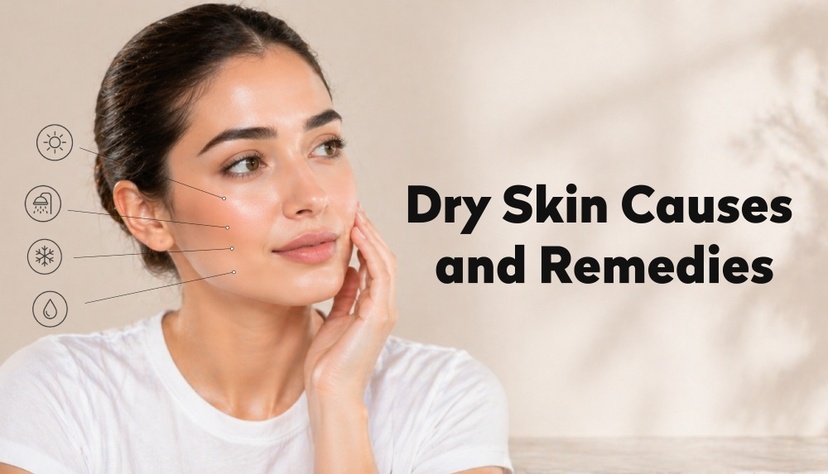
Various factors affect the health of your skin, including biological and environmental factors. To reduce dry skin, some may have to look for natural preventive methods or consult a specialist doctor. If you suffer from dry skin, you will find the most suitable solution for you in this article. But let's first ask some pivotal questions about this:
What are the factors that may lead to dry skin? Are there really home remedies? And what is the best daily routine for sensitive skincare?
Some may have questions like these. Therefore, we started to explore the most important causes of dry skin, with basic steps to help you restore its hydration and treat the problem effectively.
Normally, the skin is covered with a thin layer of natural oils and sweat that help keep it moisturized and protected, preventing it from losing water and thus keeping it properly hydrated. Dry skin, which may appear rough and fragile and is characterized by tightness, is dehydrated skin that is uncomfortable and lacks its natural radiance.
Dry skin worsens when it loses water quickly, losing its softness and elasticity. To maintain its health and perform its function normally, the skin needs a balance between water and natural oils.
Lack of hydration may be related to several factors such as aging, health condition, changing seasons, and bathing habits. This problem often increases in the winter season, when the air is cold and dry, which accelerates moisture loss.
Dry skin can also affect any part of your body, but it most often affects the hands, arms, legs, and sometimes the face. It is known as an uncomfortable condition characterized by peeling, itching, and cracking. This condition may occur for various reasons.
Your skin may be naturally dry, but even if your skin tends to be oily, it can become dry from time to time.
The skin is considered the body's first line of defense, as it prevents harmful bacteria and microbes from entering the body, and protects humans from the surrounding environment. However, when the skin becomes dry, it can crack and become inflamed easily, making you more susceptible to infection.
Although dry skin is not a serious health problem, it can sometimes lead to skin complications and be difficult to treat. In addition, dry skin tends to develop wrinkles and a rough texture. The shrinkage of the skin resulting from dryness can cause cracks that affect your external appearance and the health of your body.
Under normal circumstances, the body loses about 40,000 skin cells daily and replaces them with new ones. The outer layer of the skin consists of a mixture of dead skin cells and natural oils, which help retain moisture. If this layer is damaged and loses moisture, or if there is a defect in the skin cell renewal process, the skin may appear scaly or cracked.
Below we mention the factors that may lead to dry skin, including:
To ensure effective treatment of dry skin, you must adhere to a safe care routine and make sure to moisturize your skin through natural recipes to treat dry skin.
Coconut oil has soothing properties. These properties fill the gaps between skin cells, creating a smooth surface. Saturated fatty acids that are naturally found in coconut oil have a great ability to moisturize and soften the skin.
Coconut oil can be used as a moisturizer for dry areas of the body, thanks to its rich formula that helps soften the skin. However, it is preferable to use it with caution on the face, as it is a relatively heavy oil, especially in sensitive areas such as under the eyes and around the mouth, and it may not suit all skin types.
It is easy to use without the need to mix it.
An oatmeal bath is a common remedy for soothing irritated skin. Studies have shown that colloidal oatmeal contains antioxidants and anti-inflammatory properties that help reduce irritation and relieve itching.
For the best result, it is recommended to moisturize the skin after bathing to maintain the protective barrier and prevent moisture loss.
An oatmeal bath can be prepared at home by grinding oats into a fine powder using a blender, then adding it to warm water, or by using ready-made products for this purpose.
Honey is a natural moisturizer, as it helps attract moisture and retain it within the skin. It also contains antioxidants and nourishing compounds that are believed to support skin cell regeneration and help soothe redness and improve skin appearance.
Raw honey can be used as a moisturizing mask by applying it to clean skin and leaving it for a few minutes, then rinsing it off with lukewarm water. With regular use, it contributes to giving the skin softness and a fresher appearance.
Dry brushing involves using a natural brush with dry bristles to massage and exfoliate the skin. This helps remove dead skin cells and open pores, which contributes to softening the skin and giving it a more youthful appearance. In addition, dry brushing can enhance blood flow, and improve lymphatic drainage, which gives a feeling of energy as it stimulates the nervous system.
To use, sweep the brush over the skin in long strokes toward the heart, focusing on the extremities. Circular movements can be used on the torso and back.
It is preferable to reduce pressure in sensitive areas such as the abdomen and neck.
Dry brushing can be done before showering, and it is recommended to moisturize the skin immediately afterward to maintain its softness and hydration.
Usage depends on your skin's needs and type. Avocado is beneficial for dry or mature skin due to its ability to moisturize and nourish the skin, and it also has anti-aging effects.
Olive oil can treat the skin as well, and it is known for its ability to combat bacteria on the skin surface. Olive oil also helps reduce signs of aging.
Avocado oil is also thicker compared to olive oil, so it may leave a greasy feeling, and it is suitable for dry skin. As for olive oil, it is lighter and absorbs quickly, making it suitable for daily use as a natural moisturizer. Olive oil is versatile and suitable for all skin types.
Drinking water regularly may reduce the appearance of wrinkles, dryness, and irritation. However, due to the underlying complexity of the dry skin problem, water may not be effective in treating your skin condition or achieving obvious improvements.
Dry skin is an external problem, and it is best to treat it from the outside. External factors such as cleaning products, environment, and oil glands are what determine how dry your skin is or how susceptible it is to dryness.
If your facial skin seems particularly sensitive or irritated by dry winter air, you may want to temporarily simplify your skincare routine. Remember that the skin's natural moisture barrier needs to be healthy and respond well to serums, toners, and other types of cosmetic treatments.
Also, if your skin is irritated, it may become more sensitive to ingredients such as fragrances and alcohol. This means that products that usually made your skin feel great could turn into irritants.
Try to keep a simple routine. Use only a moisturizer and sunscreen in the morning.
In the evening, use a cleanser with moisturizing properties.
Once you are confident that your skin's natural moisture barrier is healthy, you can slowly reintroduce treatments and other ingredients to your routine.
Our experts also recommend using clinically tested skincare products to ensure almost immediate results in a short time. We have found that Vichy products are one of the best solutions to protect your skin in Morocco and the Arab world. You can adopt the skin-boosting Minéral 89 products for hydration, as well as the probiotic fraction corrector from the same range.
Nutrition is an essential part of skin health. However, some foods can reduce or hinder some protective capabilities, leading to worsening dry skin. In this section, we will discuss the impact of nutrition on dry skin.
Nutrition is necessary to help the skin provide this protective barrier. If a person eats a healthy, balanced diet that provides the nutrients they need, they can support the skin's protective functions.
Dry skin may be a symptom of a deficiency in some nutrients, including:
Ensuring these vitamins and minerals are present in the diet is a factor that helps maintain skin health. Also, eating Omega-3s, and antioxidants found in green tea and turmeric can also help prevent dry skin.
But what is the list of foods that contain these nutrients in sufficient quantities?
Every 100 grams of beef liver contains more than 6,000 milligrams of vitamin A, equivalent to 700% of the required daily amount.
Vitamin A is an essential nutrient, found in animal foods, and helps repair damaged skin.
Every baked sweet potato with the skin contains 1,403 micrograms of vitamin A, covering the daily requirement.
Kiwi is a good source of vitamin C. One kiwi contains 64 milligrams of vitamin C, representing 71% of the required daily value.
Sunflower seeds are a good source of vitamin E. 28 grams of dry roasted sunflower seeds contain 7.4 milligrams of vitamin E.
Green tea can help reduce the signs of aging caused by exposure to ultraviolet rays, such as hyperpigmentation, dry skin, and other signs of damage.
Green tea also increases the collagen and elastic fiber content in the skin, and reduces oxidative stress, leading to smoother, more hydrated skin.
Most cases of dry skin respond well to lifestyle changes and home remedies. However, you may need help from your general practitioner or dermatologist if:
We also strongly recommend seeking medical help as soon as possible if your skin condition worsens over time.
Ultimately, dry skin is common, and can be caused by a variety of reasons, including environmental factors, daily habits, and nutritional deficiencies. By understanding these causes and following our guide to appropriate home remedies, you can effectively improve the condition of dry skin and restore its moisture and softness.
However, if the problem worsens, it is essential to consult a specialist doctor or use medically approved products specially designed for dry skin care. In this context, Vichy offers a variety of reliable medical products that have been carefully developed to meet the needs of dry skin and effectively moisturize it. Feel free to visit the Vichy website or their points of sale to get ideal products for your skin.
The causes of dry skin vary from one person to another, as this is related to age, daily routine, nutrition, and the person's disease record.
Yes, there are proven ways to protect your skin from dryness through tested home recipes.
Vitamins A, C, D, and E are essential to ensure the protection of your skin, and consuming foods rich in Omega-3 helps prevent dry skin.
Yes, nutrition is among the factors affecting the skin.
If your skin is continuously worsening and does not improve by adopting various expert tips, this may be a sign of a health problem that requires specialist intervention.
First, make sure you do not suffer from any allergies and seek medical advice.